Updated November 2, 2026: rebuilt with Valve’s current prices, its refurbished program, the cheaper SteamOS rivals and our own Cyberpunk 2077 and Forza Horizon 6 tests.
A year ago, the cheapest new Steam Deck cost $399. Today it costs $789.
Our call, as of November 2026: buy a Steam Deck OLED if your games already live on Steam, and buy it Valve-refurbished if you can, since that saves up to 20%. Skip it if you mainly play Game Pass or anti-cheat shooters. Don’t wait for a Steam Deck 2: leakers point to 2028.
How this post was made: researched and written with Claude, an AI assistant, checked against the sources linked in this post, and overseen by Nersing Pradhan. How we make NP Handhelds
As an Amazon Associate, NP Handhelds earns from qualifying purchases. Some links on this page are affiliate links; they never change a pick, and our affiliate disclaimer explains how it works.
The verdict in one table
| You are… | Our call | Why |
|---|---|---|
| A Steam player with a big library | Buy now, refurbished first | The Deck runs your library with the least fuss of any handheld |
| Mostly a Game Pass or Fortnite player | Skip | Game Pass is a workaround on SteamOS, and some anti-cheat games won’t run at all |
| On a tight budget | Skip, or look at refurbished | The Switch 2 costs $499, and a SteamOS Legion Go S was $650 in April |
| Waiting for a big performance jump | Don’t wait for the Deck 2 | Valve is working on it, but leakers point to 2028 |
| In India | Look at the ROG Xbox Ally first | Valve doesn’t sell the Deck there, so imports come without official warranty support |
The rest of this page is the reasoning, starting with how the cheapest Steam Deck nearly doubled in price in a year.
What happened to the price
On May 27, 2026, Valve raised the price of the 512GB Steam Deck OLED from $549 to $789 and the 1TB model from $649 to $949, effective immediately, Game Informer reported. Valve’s explanation, as Game Informer quoted it, was that the new prices “reflect the current state of component costs and other global logistical challenges across the industry as a whole.” Those are still the prices on Valve’s Steam Deck store today.
The cheaper LCD model was already gone by then. In December 2025, Valve said it would no longer make the $399 LCD model, and its last units sold out during the Steam Winter Sale, PCWorld reported. In about five months, the cheapest new Steam Deck went from $399 to $789.
| Date | What changed | Prices |
|---|---|---|
| February 2022 | The original Steam Deck launches with an LCD screen | $399 (64GB), $529 (256GB), $649 (512GB) (Engadget) |
| November 2023 | The OLED model launches, and the 256GB LCD becomes the entry model | OLED $549 (512GB) and $649 (1TB); LCD $399 (Android Authority) |
| December 2025 | The last LCD units sell out | OLED from $549 |
| May 2026 | Valve raises OLED prices | $789 (512GB) and $949 (1TB) |
That’s a 44% increase on the 512GB model and 46% on the 1TB.
The cause wasn’t the Deck itself. The same squeeze shows up in Valve’s new Steam Machine, whose price Valve’s engineers said came out significantly higher than expected. Its Wikipedia entry ties that to the global component shortage driven by AI data centers, and reports that Valve engineers said in July 2026 that they didn’t expect memory prices to fall until at least the end of the year.
That matters for anyone hoping to wait out the increase. A price cut needs cheaper memory first, and Valve’s own engineers didn’t expect that before the end of 2026 at the earliest.
So if the price is staying, the question becomes what $789 actually buys.
What $789 buys you
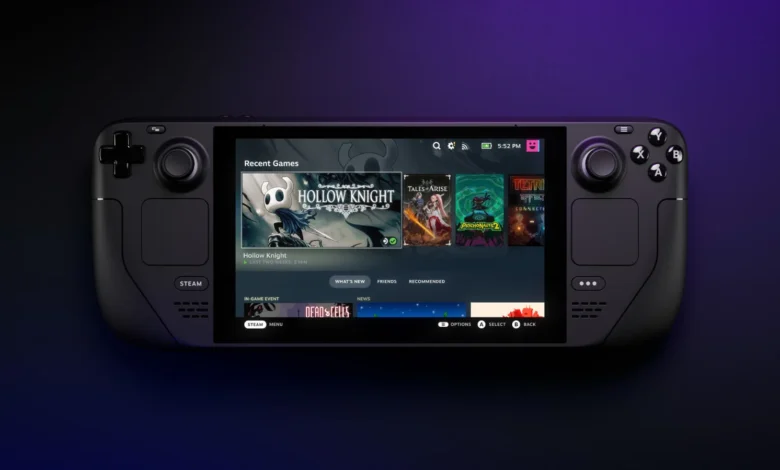
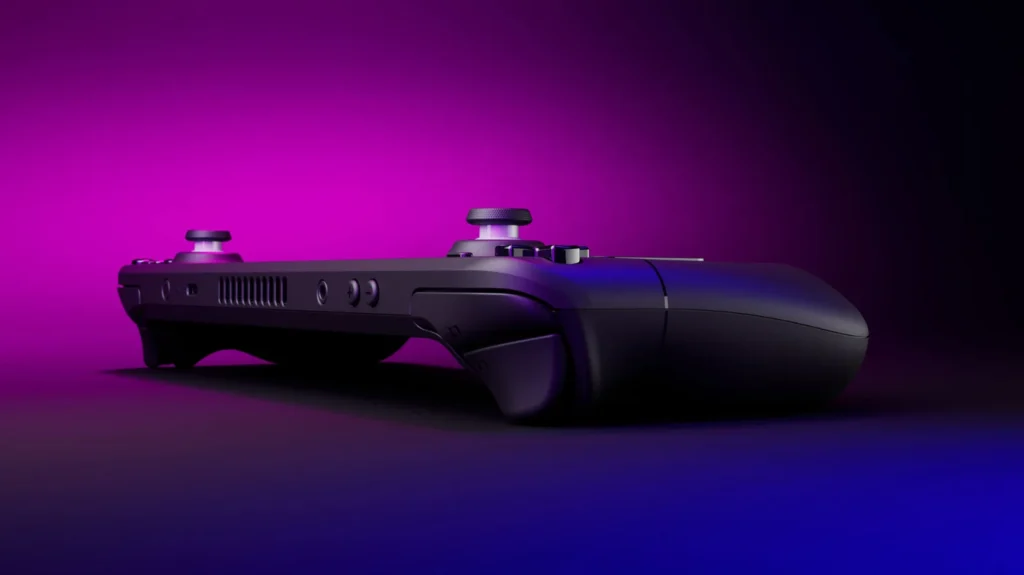
The 512GB OLED model gets you a 7.4-inch HDR OLED screen at 1280 x 800 and up to 90Hz, rated at 1,000 nits peak brightness in HDR and 600 nits in SDR. Valve’s tech specs list a 50Wh battery rated at 3 to 12 hours of play, 16GB of LPDDR5 memory, Wi-Fi 6E and Bluetooth 5.3, in a device that weighs about 640g. Valve says the OLED gets 30 to 50% more battery life than the old LCD model, runs cooler and weighs 30g less.
The processor is the 2022 design moved to a smaller 6nm process: still four Zen 2 CPU cores and eight RDNA 2 graphics compute units. That’s the part that hasn’t moved in four years, and it’s why the performance section below matters more than the spec sheet.
The box matters too. Valve’s OLED page lists a carrying case and a 45W charger for both models, and the spec sheet puts the charger’s cable at 2.5m. The $949 1TB version adds a removable liner for the case and premium anti-glare etched glass on the screen.
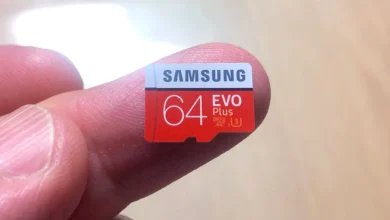
That $160 gap between the two models is the first decision most buyers face. If you mostly play indoors, the 512GB model plus a microSD card is usually the better buy, as long as the card costs well under $160 where you shop; our microSD card guide covers which card to get. If you play by windows or outdoors, the etched glass is the part of the 1TB model you’ll notice every day.
Specs on a page don’t answer the real question, though: can a chip designed for 2022 still run 2026 games?
Can it still run new games? Our tests
We put two of the most demanding games on the Deck through our own tests for the NP Handhelds channel.
Cyberpunk 2077 ran locked at 30fps on its recommended settings. Turning on Frame Generation pushed it past 40fps and made it feel smooth, while dropping every setting to low gained only about 5 more frames. The lesson: on the Deck, the right feature matters more than the lowest preset.
Forza Horizon 6 ran at 30fps out of the box on the game’s recommended settings, with graphics on low and shaders on medium. Raising the frame limit pushed it to 45fps, sometimes 50, with some stutter. It isn’t a locked 60, but for a big open-world racer on a handheld this size it holds up, and it still looks good on low settings.
That’s the honest shape of a Steam Deck in 2026: big new games run at 30 to 45fps once you tune them, and our performance settings guide shows where to start. Smaller and older games ask much less of the hardware, and they’re where the Deck is at its best.
What the Deck can’t fix with settings is anti-cheat. Some of the biggest online games block SteamOS outright, including Fortnite and Valorant. If those are your main games, no price makes the Deck worth it.
Check your library before you spend $789
This is the step most buyers skip, and it takes five minutes. Sign in to Steam and open Valve’s Your Library on Deck page, which lists the games you own that Valve has tested so far. Valve sorts games into four ratings, explained on its Deck Verified page:
- Verified: the game works great on the Deck straight out of the box.
- Playable: the game may need some manual tweaking from you.
- Unsupported: the game doesn’t currently work on the Deck.
- Unknown: Valve hasn’t checked the game yet.
Don’t count the whole backlog. Count the games you’ve actually played in the last year, because those are the ones the purchase has to serve. If most of them are Verified or Playable, the Deck will earn its price. If your most-played games are Unsupported, or they’re online shooters with anti-cheat, it won’t, however good the screen is.
If your library passes that test, the next question is what the money works out to.
The money question: what $789 works out to
A handheld’s price looks different spread over the hours you’ll use it. Play 10 hours a week for three years and that’s 1,560 hours, so a $789 Deck works out to about 51 cents an hour. At five hours a week, it’s about $1.01 an hour. Add Valve’s $79 dock and the 10-hour figure rises to about 56 cents.
The bigger number is the one you don’t pay. If you already own a Steam library, you don’t buy those games again: the Deck plays them, and Steam Cloud carries your saves between PC and Deck in games that support it. A Switch 2 costs about $290 less up front, but it starts you on a new library, and Nintendo’s own games rarely get deep discounts.
The reverse holds too. If your Steam library is small, or most of what you play lives on another platform, the Deck’s advantage shrinks to its hardware, and at $789 the hardware alone faces far stiffer competition than it did at $549.
What else $789 buys in 2026
The Deck isn’t the default bargain anymore, because the price rise put it in the middle of the pack rather than below it.
| Device | Price | Software | Best for |
|---|---|---|---|
| Nintendo Switch 2 | $499 after a $50 rise in September (Tom’s Hardware) | Nintendo | Nintendo games and families |
| ROG Xbox Ally | $599.99 at launch (Wikipedia) | Windows | Game Pass and anti-cheat games |
| Lenovo Legion Go S (SteamOS, Z2 Go, 16GB/512GB) | $650 in April, up from $600 (PCWorld) | SteamOS | The cheapest way into a SteamOS handheld |
| Steam Deck OLED 512GB | $789 | SteamOS | Steam libraries and battery life |
| ROG Xbox Ally X | $999.99 at launch | Windows | More performance on Windows |
| Steam Machine 512GB | $1,049, or $1,128 with a controller (Steam) | SteamOS | Playing Steam on a TV |
| Legion Go 2 (SteamOS) | $1,199 at its January announcement (Android Authority) | SteamOS | The most power in a SteamOS handheld |
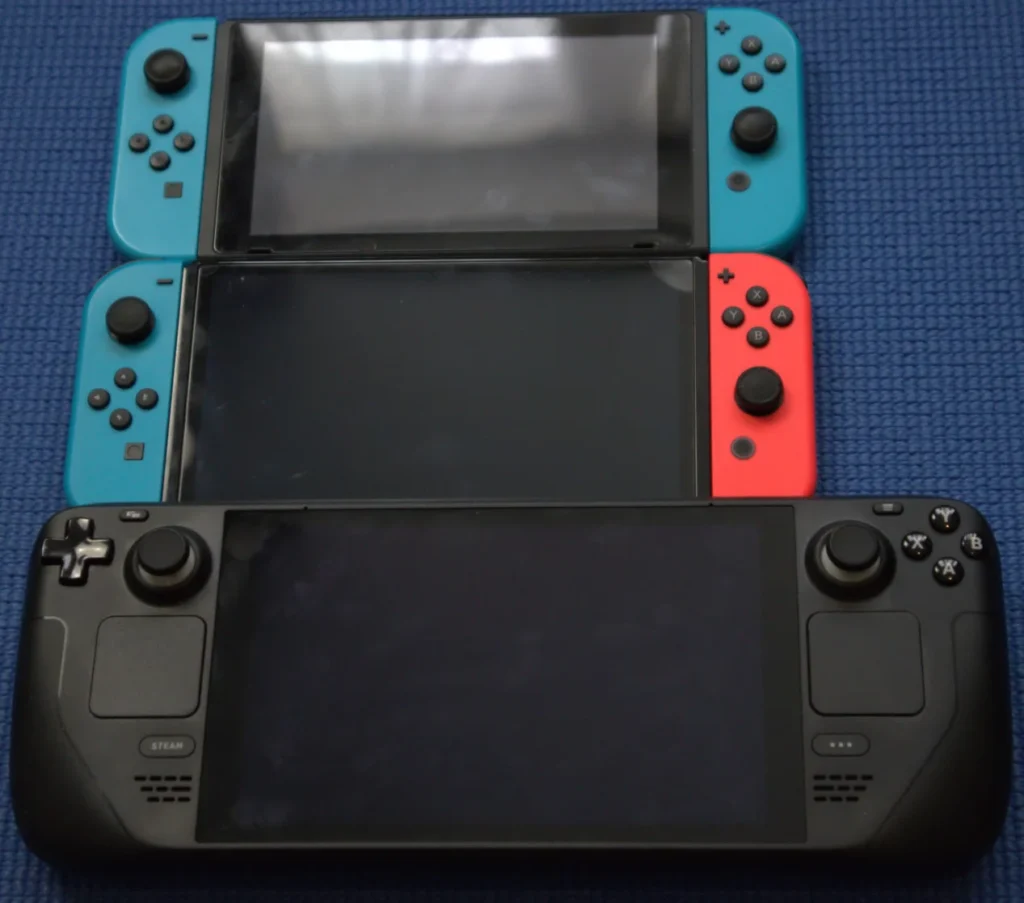
Two rows deserve a closer look. First, the SteamOS Legion Go S was listed below the Deck’s price in April, so the Deck is no longer the cheapest way into a SteamOS handheld. Second, the ROG Xbox Ally launched at $599.99 and runs Windows, which solves the Game Pass and anti-cheat problems the Deck can’t.
What the Deck still has is polish. Valve’s controls, trackpads, OLED screen and battery life come as one tuned package, and SteamOS was built for it first. Our full comparison of Steam Deck alternatives weighs each rival, and our Steam Deck vs Switch 2 breakdown covers the most common choice.
Steam Deck plus a dock, or a Steam Machine?
Valve now sells two ways to play Steam on a TV, and the Deck is the cheaper one. A Steam Deck OLED with Valve’s $79 dock costs $868. The Steam Machine, released on June 29, 2026, starts at $1,049 for 512GB.
The gap in power is bigger than the gap in price. The Deck has four CPU cores and eight graphics compute units. The Steam Machine has six cores and 12 threads at up to 4.8GHz, and 28 graphics compute units at a 2.45GHz sustained clock, according to its Wikipedia entry. Docked, the Deck is still a handheld chip driving a TV, so it suits older games, indie games and anything you’d happily play at lower settings.
So the split is simple. If you’ll play handheld most of the time and on the TV sometimes, buy the Deck and add a dock later; our accessories guide compares Valve’s dock with cheaper hubs. If the TV is where you’ll play most, the Steam Machine is the better buy for the extra $181, because it’s built for that job.
For Steam players who want the handheld, there’s a cheaper way into the same hardware.
Refurbished: the smartest way to buy a Deck now
Valve sells Certified Refurbished Steam Decks on its store when it has stock. Valve says they save up to 20% and come with a one-year warranty. On a $789 Deck, 20% is about $158, which makes refurbished the closest thing to a price cut you’ll get in 2026.
A used Deck from a stranger can be cheaper still, but it carries risks a refurbished unit doesn’t. Check three things before you pay: battery health, the thumbsticks for drift, and whether the seller has factory reset it. An LCD model is only worth it at a clear discount, because it has the shorter battery life and Valve no longer makes it.
Used LCD or refurbished OLED?
With the LCD out of production, a used one is the cheapest way into a Deck. Valve’s own comparison chart shows what you give up:
| Steam Deck LCD (256GB) | Steam Deck OLED (512GB) | |
|---|---|---|
| Screen | 7-inch LCD, up to 60Hz | 7.4-inch HDR OLED, up to 90Hz |
| Battery | 40Wh, rated at 2 to 8 hours | 50Wh, rated at 3 to 12 hours |
| Wi-Fi | Wi-Fi 5 | Wi-Fi 6E |
| Chip | 7nm APU | 6nm APU |
| Charger cable | 1.5m | 2.5m |
The screen and the battery are the differences you’ll feel every day. Valve kept the same processor design in both, so an LCD at a big enough discount is still a sensible buy if you mostly play plugged in or in short sessions. For long trips, bright rooms and dark-scene games that show off the OLED’s contrast, the OLED is worth the difference.
The other way to save is to wait. That’s where the Steam Deck 2 comes in.
Should you wait for the Steam Deck 2?
Valve is working on it. Pierre-Loup Griffais told IGN, “We’re hard at work on it,” in an interview around the new Steam Controller’s launch, TweakTown reported. Valve has also said it won’t release a Steam Deck 2 unless it can deliver a substantial performance improvement over the original, so a minor refresh isn’t the plan.
The timing is rumor, and we’ll label it that way. Insiders and known leakers cited by TweakTown point to a 2028 launch window, and rumors say Valve may use an off-the-shelf AMD chip, possibly something like the Ryzen Z2 Extreme, rather than a custom one. The same report says the memory and storage crisis means those plans will likely change.
Waiting has a price, even if it’s not on a receipt. If the Deck 2 lands in 2028, waiting means about two years without a handheld, and a new device launched in a memory shortage is unlikely to come cheap. Our Steam Deck 2 tracker collects everything Valve has said.
For most people, the answer depends less on the calendar than on who they are.
Who should buy, who should wait, and who should skip
Buy now if you already own a Steam library, play mostly single-player or Deck-friendly online games, and want the handheld with the least tinkering. Buy refurbished if stock allows. The OLED’s battery life and screen are the parts no rival matches at this price.
Wait if you can hold out for a Valve refurbished restock, or a sale drops the price. Waiting for a Deck 2 only makes sense if you need much more performance and already have something to play on.
Skip it if your main games are Fortnite, Valorant or other anti-cheat shooters, or if you live in Game Pass. Look at the ROG Xbox Ally instead. Skip it too if you’re buying mostly for a child or for Nintendo games: the Switch 2 costs less and fits that job better.
If you’re in India
The Steam Deck isn’t sold officially in India, so buying one means a gray-market import. Writing about the Steam Machine in July 2026, Outlook Respawn noted that Valve has no official launch planned for India, a familiar story for anyone who tried to buy a Steam Deck there, and that gray-market imports come with no official warranty support. Factor the import margins and the repair risk into the $789.
The ROG Xbox Ally is the easier route because it’s sold officially. ASUS launched it in India at ₹69,990, with the Ally X at ₹1,14,990, through ASUS and ROG stores, Vijay Sales, the ASUS e-shop and Amazon, Digit reported in October 2025. See it at ASUS ROG India.
For readers in India: Check today’s price on Amazon India
When to recheck this verdict
We’ll update this page when any of these happen:
- Valve changes the Deck’s price, or memory prices start to fall.
- Valve announces the Steam Deck 2, or gives a date.
- Valve restocks refurbished units at a new discount.
- A big seasonal sale, such as Steam’s Winter Sale, includes the Deck.
How we tested
Nersing tested two games on his own Steam Deck for the NP Handhelds channel: Cyberpunk 2077 and Forza Horizon 6, with the settings and frame rates in the videos above. Everything else on this page comes from the sources linked where it’s used: prices from Valve’s store and the outlets named next to each one, specs from Valve’s spec sheet, and the Steam Deck 2 timing from TweakTown’s report, which we label as rumor. We haven’t measured battery life or tried the refurbished program or the rival handhelds ourselves yet. When Nersing does, the results go on the channel first and into this page after.
Frequently asked questions
Is the Steam Deck LCD still available?
Not new. Valve stopped producing the LCD model, and its last units sold out in December 2025. You can still find LCD units used.
Will the Steam Deck price go down again?
Not soon, on current evidence. Valve tied the increase to component costs, and its engineers said in July that they didn’t expect memory prices to fall until at least the end of 2026.
Is the Steam Deck 2 coming soon?
No. Valve confirms it’s working on it, but it hasn’t given a date, and leakers point to 2028.
Can the Steam Deck play Game Pass games?
Not natively. Game Pass PC games are made for Windows, and SteamOS isn’t Windows. If your Game Pass plan includes cloud play, you can stream games through Xbox Cloud Gaming in a web browser on the Deck, but that needs a fast, stable connection. If Game Pass is your main library, a Windows handheld such as the ROG Xbox Ally fits better.
How long does the Steam Deck OLED battery last?
Valve rates its 50Wh battery at 3 to 12 hours, depending on the game. Demanding 3D games sit near the bottom of that range and lighter games near the top. Capping the frame rate in the Deck’s performance menu is the easiest way to stretch it.
Does the Steam Deck come with a charger?
Yes. Both OLED models come with a 45W USB-C charger on a 2.5m cable and a carrying case.
Is a used Steam Deck LCD worth it in 2026?
Yes, at a clear discount. It plays the same Steam library, but with a 7-inch 60Hz LCD, a 40Wh battery Valve rates at 2 to 8 hours, and Wi-Fi 5. Check battery health and the thumbsticks before you pay.
Which Steam Deck OLED should I buy?
The 512GB model for most people. The 1TB model’s extra $160 buys anti-glare glass and double the storage; if you don’t play in bright light, a microSD card adds storage for less.
The Steam Deck at $789 is the same machine it was at $549. What changed is everything around it, and the right buy is the one that matches the games you already own.